


Dominate Local Search: Your Essential Guide to On-Page SEO Excellence
Did you know that over half of all web traffic originates from organic searches? Mastering on-page SEO is your key to transforming your website into a top-ranking asset that consistently attracts customers. This comprehensive guide will walk you through exactly what on-page SEO entails, how it directly boosts your search engine rankings, and which core elements demand your attention. We’ll dive into local keyword research tools, intent mapping, advanced content optimization for E-A-T, crucial technical improvements from title tags to canonical URLs, multimedia SEO for images and video, smart linking strategies, essential schema markup, and a complete on-page SEO checklist. Finally, you’ll discover why Connect Boost’s specialized approach for small to medium-sized local businesses delivers tangible, measurable growth. Let’s kick things off by defining on-page SEO and its vital role in making your business discoverable.
Discover Why On-Page SEO Is Your Secret Weapon for Local Rankings
On-page SEO is all about fine-tuning every element of your website’s visible content and underlying HTML to make it more relevant and user-friendly. This direct optimization effort signals to search engines that your site is a valuable resource, leading to improved search engine rankings and attracting the right local customers. By aligning your page elements with the keywords your ideal customers are searching for, on-page SEO tells search algorithms that your site provides authoritative answers, significantly boosting your organic visibility.
How Does On-Page SEO Actually Elevate Your Search Rankings?
On-page SEO works its magic by optimizing critical elements like title tags, header tags, and the overall relevance of your content. This helps search engines accurately understand your page’s context and authority. When your HTML elements are structured correctly and your copy is rich with relevant terms, search engine crawlers can index your pages for precise queries, ultimately pushing you higher in search results and SERP features.
What Are the Absolute Must-Focus On-Page SEO Factors?
Here’s a clear breakdown of the essential on-page SEO factors and how they directly influence your website’s performance:
RevenueZen, Top 8 On-Page SEO Factors, (2025)
Top 8 On-Page SEO Factors You Can’t Ignore
On-page SEO is the art of optimizing your website’s individual pages to improve their relevance and usability, which directly translates to better search engine rankings. The most critical factors to focus on include your title tags, meta descriptions, header tags, the overall quality of your content, image alt text, URL structure, internal linking, and ensuring your site is mobile-friendly.
By mastering these eight fundamental factors, you’ll build a rock-solid on-page foundation, setting the stage perfectly for understanding the specific advantages on-page SEO offers local businesses.
How Does On-Page SEO Specifically Benefit Small to Medium-Sized Local Businesses?
On-page SEO is a game-changer for local businesses because it allows you to integrate geo-targeted keywords and optimize your Google Business Profile signals. This drives more qualified foot traffic and local inquiries directly to your door. A streamlined website with optimized technical elements ensures faster page loads, which is crucial for mobile users actively searching locally, and helps you rank higher in those coveted map packs.
InMoment, Local SEO: Tips & Strategies to Get Discovered, (2025)
Essential Best Practices for Local SEO Success
Local SEO is all about optimizing your business’s online presence to attract more customers from searches happening within your specific geographic area. Key strategies include perfecting your Google My Business listing, creating content that resonates with your local audience, building citations on relevant online directories, actively managing customer reviews, and strategically targeting keywords that reflect local intent.
Mastering Keyword Research for Powerful Local On-Page SEO
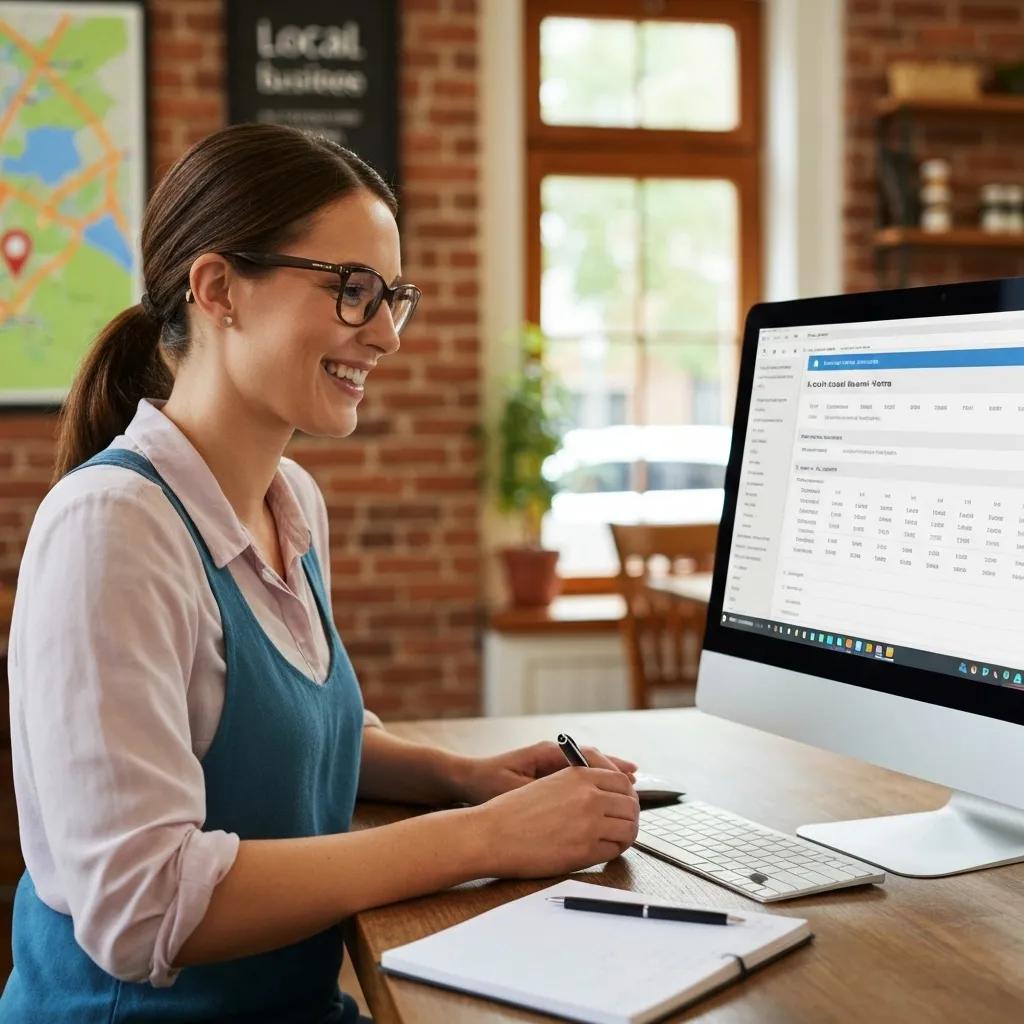
Effective local keyword research is your compass to discovering high-value terms that your target audience is actively using, enabling you to attract prospects who are ready to buy. By combining essential search volume data with precise local modifiers, you can strategically map keywords to the pages that best match user intent and regional demand.
Backlinko, Local SEO: The Definitive Guide for 2025 (+ Free Toolkit), (2025)
Unlock Local Keywords That Actually Bring in Customers
To truly rank for local searches, you must use the exact language your local customers use. This means finding high-volume keywords with clear local intent and seamlessly integrating them into your title tags, meta descriptions, URLs, headers, and all your page copy.
Which Tools Are Your Best Bet for Discovering Geo-Targeted Keywords?
Uncover valuable local search terms and emerging trends with specialized keyword research tools that analyze search volume, competition levels, and location-specific modifiers.
These powerful tools simplify the process of local keyword discovery, preparing you to expertly map user intent to your on-page elements in the next crucial step.
How Do You Accurately Understand and Map Local Search Intent?
Mapping local search intent involves categorizing keywords into informational, navigational, and transactional buckets, then matching them with the most relevant pages on your site. For instance, a search like “best pizza near me” (transactional) should lead to your menu page, while “pizza restaurant hours” (navigational) is best suited for your FAQs or contact section. Aligning keyword intent with your page’s purpose ensures visitors find what they need quickly and signals strong relevance to search engines.
How Do You Effectively Implement Local Keywords Across Your On-Page Elements?
Seamlessly integrate your geo-targeted keywords into your title tags, meta descriptions, header tags, and body content. Place your primary keywords prominently in your H1 and title tags, while secondary variations should naturally appear in H2s and image alt text. Embedding your location name directly into URLs (e.g., ) further strengthens your local search signals.
Unlocking Top On-Page SEO Techniques for Superior Content Optimization
Outbrain Blog, Best SEO Practices: 28 Strategies for Dominating Search Engine Rankings, (2025)
The Golden Rules of SEO Best Practices
Creating high-quality content is the bedrock of any successful SEO strategy. Your content must be informative, highly relevant to your audience, and naturally incorporate the keywords they use when searching online. Engaging, well-structured content that utilizes headings and bullet points is also paramount.
How to Craft Engaging, Entity-Rich Content That Captivates Users?
Entity-rich content weaves together related topics, compelling examples, and supporting data points into comprehensive narratives that fully satisfy searcher intent and significantly reduce bounce rates. Use clear, concise explanations, relevant case study snippets, and well-placed subheadings to guide readers through valuable insights, encouraging longer site visits and boosting conversions.
What Are the Best Practices for Ensuring Readability and User Engagement?
Achieving effective readability means combining short, punchy paragraphs, using the active voice, and incorporating visual aids like lists and tables. Breaking down your content into digestible segments with meaningful subheadings helps both users and search engine crawlers understand your page structure, leading to increased time on page and signaling higher quality to algorithms.
- Keep sentences concise, ideally under 20 words, for maximum clarity.
- Employ transition words and phrases to ensure a smooth, logical flow.
- Utilize bulleted lists to highlight key takeaways and actionable steps.
Implementing these practices creates an engaging reading experience that naturally leads into optimizing for crucial trust signals.
How Can You Optimize Your Content for E-A-T Signals and Build Unshakeable Trustworthiness?
Demonstrate your expertise and authority by citing established industry best practices, showcasing your team’s credentials, and linking to credible external research. Including author bylines and publishing dates adds a layer of transparency, while using structured data for articles can highlight your content’s authenticity.
Optimizing Technical On-Page SEO Elements for Maximum Impact

Technical on-page SEO ensures that search engine crawlers and your website visitors have a seamless, error-free experience with pages that load rapidly and adhere to all best practices. Optimizing these foundational elements is critical for the success of any content strategy.
What Are the Absolute Best Practices for Title Tags and Meta Descriptions?
Your title tags should be under 60 characters, starting with your primary keyword, and can include your brand name when appropriate. Meta descriptions, kept under 160 characters, must provide a compelling summary of the page’s value and include a clear call to action to drive higher click-through rates and improve overall relevance signals.
How Should You Structure and Utilize Header Tags (H1-H6)?
Header tags are essential for structuring your content hierarchically. Use a single H1 tag to clearly define the page’s main topic, followed by H2 tags for major sections and H3 tags for subpoints within those sections. Consistent header usage not only improves accessibility and content scannability but also helps distribute keywords naturally, reinforcing your page’s context for search engines.
How Do You Create SEO-Friendly URL Structures and Effectively Use Canonical Tags?
Opt for concise, descriptive URLs with hyphens separating words (e.g., ). Crucially, implement canonical tags on any duplicate or very similar pages to consolidate link equity and prevent indexing conflicts, ensuring search engines prioritize the intended, canonical version of your content.
Elevating Visual and Multimedia SEO for Your Local Business
Optimizing your images and videos not only enhances page speed and accessibility but also significantly boosts user engagement. Properly tagged multimedia assets can also appear directly in image and video search results, dramatically increasing your brand’s exposure.
What Are the Most Effective Strategies for Image Alt Text and Filenames?
Every image on your site needs descriptive alt text that clearly explains the visual content using relevant keywords (e.g., “infographic on-page SEO checklist for local businesses”). For filenames, use keyword-rich, hyphenated terms (e.g., ) to support better indexing.
How Does Image Compression Impact Your Page Speed and Search Rankings?
Compressing your images reduces their file size without any noticeable loss in quality. This process significantly accelerates page load times and improves your Core Web Vitals scores. Faster-loading pages provide a superior user experience and align perfectly with Google’s page experience ranking factors.
How Can You Optimize Video Content Specifically for Local SEO?
Host or embed short, informative videos that feature descriptive titles and transcripts. Use captions that incorporate location-specific terms and implement video schema markup within your video metadata for enhanced visibility in video carousels. Optimized video content is a powerful tool for boosting engagement and reinforcing your regional relevance.
Mastering Internal and External Linking Strategies for Peak On-Page SEO
Your linking strategies are vital for distributing authority across your site, guiding search engine crawlers efficiently, and helping users discover more relevant information. A well-balanced approach to both internal and external links significantly elevates your content’s topical depth and credibility.
How Do You Build a Robust Internal Link Profile That Truly Supports Your SEO Efforts?
Strategically link to your cornerstone content from relevant blog posts and service pages, always using descriptive anchor text (e.g., “on-page SEO best practices”). Group related content into logical topic clusters, allowing your internal links to reinforce semantic relationships and ensure that authority flows smoothly throughout your site.
What Are the Smartest External Linking Practices to Boost Your Authority?
When supporting claims or data points, link out to reputable industry resources, studies, or tools. Referencing authoritative external domains signals credibility and provides valuable context to search engines. Remember to use nofollow attributes on links to low-trust sites to protect your own site’s trust signals.
How Can You Optimize Anchor Text for Maximum Semantic Relevance?
Craft concise anchor phrases that incorporate your target entities (e.g., “meta description optimization” or “local keyword research tools”). Avoid generic phrases like “click here” and maintain a diverse range of anchor text variations to prevent any perception of over-optimization.
Leveraging Structured Data and Schema Markup to Skyrocket Local SEO Rankings
Structured data acts as a translator, clarifying your content’s meaning for search engines. This unlocks rich results like local business listings, FAQs, and how-to guides, all of which drive significantly higher click-through rates.
How Do You Implement Local Business Schema for Superior Search Visibility?
Embed Local Business schema directly onto your contact page or homepage. Be sure to include essential details like your business name, address, phone number, and service area. This crucial markup helps search engines display your business details prominently in local packs and knowledge panels.
What Product and Service Schema Markup Should Local Businesses Be Using?
Utilize Service schema for offerings like “SEO Consulting” and Product schema for tangible items. Include key properties such as , , and to clearly define your services and pricing directly within the search results pages.
How Can You Effectively Use FAQPage and HowTo Schema for Eye-Catching Rich Snippets?
Mark up common customer questions using FAQ Page schema and outline step-by-step processes with How To schema. Proper implementation of these schema types results in featured snippets that directly answer user queries right on the search results page, capturing immediate attention.
Your Ultimate On-Page SEO Checklist for Local Business Dominance
Here’s your step-by-step action plan to meticulously optimize every critical on-page SEO component for your local business:
- Optimize title tags with primary keywords and local modifiers, keeping them under 60 characters.
- Craft compelling meta descriptions with keyword-rich summaries and clear calls to action, under 160 characters.
- Structure your content logically using one H1, descriptive H2s, and supporting H3s.
- Integrate geo-targeted keywords naturally throughout your headings, URLs, and body text.
- Ensure all images have descriptive alt text and optimized, compressed filenames.
- Implement Local Business schema, ensuring your NAP (Name, Address, Phone) information is consistent.
- Build a strong internal linking structure around topic clusters using clear, relevant anchor text.
- Link to authoritative external sources to bolster your content’s context and credibility.
- Verify that your site is fully mobile-responsive and achieves optimal page speed for the best user experience.
- Use canonical tags on any syndicated or duplicate content to preserve link equity and prevent indexing issues.
Completing this comprehensive checklist guarantees meticulous optimization, aligning your content, technical settings, and structured data with your specific local search priorities.
Why Partner with Connect Boost for Expert On-Page SEO Services?
Connect Boost excels at elevating local businesses by crafting bespoke on-page SEO strategies meticulously tailored to regional markets and specific industry niches. With years of dedicated experience serving diverse businesses like restaurants, real estate agencies, fitness studios, and startups, our expert team employs proven methodologies that consistently deliver measurable increases in organic visibility and high-quality leads.
How Does Connect Boost Strategically Tailor On-Page SEO for Local Business Success?
Our process begins with in-depth keyword research laser-focused on your unique service area, followed by thorough content audits to ensure every page aligns perfectly with user intent. Our technical specialists then refine your site architecture, accelerate page load speeds, and implement advanced schema markup. Finally, we continuously monitor performance metrics and adapt our tactics to ensure sustained growth and optimal results.
What Proven Case Studies Showcase Connect Boost’s Powerful On-Page SEO Impact?
A popular midtown restaurant experienced a remarkable 45% surge in “dinner reservation” searches within just three months after we optimized their menu pages and title tags.
A boutique real estate firm saw a 30% increase in local inquiries by refining their property listing pages with neighborhood-specific keywords and implementing Local Business schema.
These success stories are a testament to our unwavering commitment to delivering data-driven, impactful results.
Elevating your on-page SEO is the most effective way to transform your website into a powerful magnet for organic search traffic and local customers. By diligently following the actionable steps outlined in this guide—from meticulous keyword research and content optimization to crucial technical enhancements and structured data implementation—you’ll establish a robust foundation for achieving higher search rankings. As search algorithms increasingly prioritize richer, entity-based understanding, mastering these on-page best practices will position your business at the forefront of digital visibility. Trust this comprehensive framework to guide your ongoing SEO efforts and drive sustainable, measurable growth for your business.